

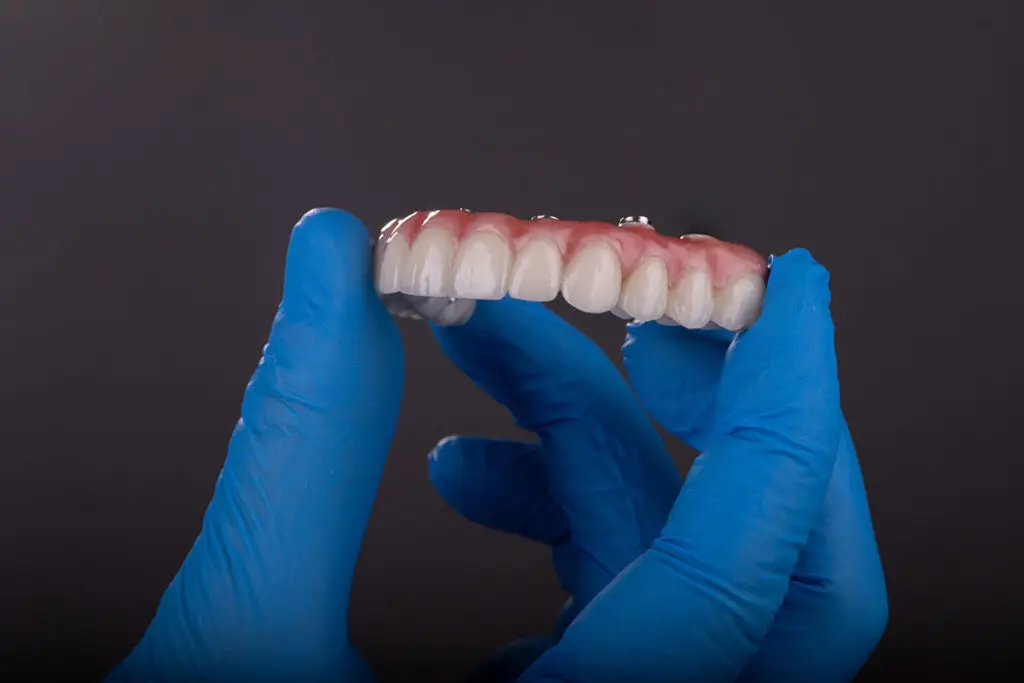
One of the most exciting parts of full-arch implant treatment is knowing that a complete smile may be possible even while the implants are still healing. However, the teeth used during the early healing period are not always the same teeth a patient will wear long term. Understanding the difference between temporary and final All-on-X fixed implants can make the treatment process much easier to follow and help patients know what to expect at each stage.
All-on-X fixed implants use several carefully positioned dental implants to support a complete upper or lower bridge. When treatment conditions allow, patients may receive a temporary fixed bridge around the time the implants are placed. After healing, that temporary restoration is replaced with a final bridge designed for long-term function, appearance, comfort, and maintenance.
Why All-on-X Treatment Often Has Two Restorative Stages
Dental implants need time to develop stable support within the jaw. Even when the implants feel secure on the day they are placed, healing continues beneath the gums. The surrounding bone needs time to respond to the implants before the final restoration is asked to handle normal long-term chewing forces.
This is one reason many All-on-X fixed implants treatment plans involve two different bridges. The first is a temporary bridge designed to give the patient teeth during healing. The second is the final bridge, which is created after the implants and surrounding tissues have had time to stabilize.
The temporary phase is not simply a waiting period. It can provide valuable information about the bite, tooth position, speech, appearance, and overall comfort before the final bridge is made.
What Is the Temporary All-on-X Bridge?
A temporary bridge is a fixed set of replacement teeth used during the early stages of treatment. When appropriate, it can be attached to the implants after placement so the patient does not need to go through the healing period without teeth.
Although the temporary bridge can look very natural, it is designed with healing in mind. It may be made from materials that are easier to adjust than the final restoration. This allows changes to be made if the bite, tooth position, or appearance needs refinement during recovery.
The temporary bridge also helps protect the treatment plan while the implants heal. Patients are usually asked to follow a softer diet because excessive pressure on the temporary restoration can also place unnecessary force on healing implants.
Why the Temporary Bridge Should Not Be Treated Like the Final Teeth
It can be tempting to assume that having fixed teeth means the implants are immediately ready for anything. However, the early healing phase requires care.
Patients may need to avoid hard, crunchy, or very chewy foods. Biting directly into hard foods can place more pressure on the bridge and implants than is appropriate during healing. Foods that are easier to chew allow patients to eat while reducing stress on the treatment area.
The exact food recommendations depend on the individual case. Following those instructions is an important part of protecting All-on-X fixed implants while the biological foundation develops.
What Can Be Learned During the Temporary Phase?
The temporary bridge gives both the patient and dental team an opportunity to see how the planned smile works in real life. A digital design or model can provide valuable information, but wearing teeth throughout the day reveals additional details.
Patients can notice how the teeth feel when speaking, smiling, and eating softer foods. They may discover that they would prefer a small change in tooth length or shape. The dental team can evaluate the bite and observe how the bridge works with the lips and facial movements.
These observations can be useful when the final All-on-X fixed implants bridge is designed. The temporary restoration therefore acts as both a functional set of teeth and an important testing stage.
How Speech May Change at First
Any major change to the shape of the teeth can temporarily affect speech. The tongue has spent years learning exactly where to contact the teeth and roof of the mouth to create certain sounds. A full-arch bridge changes some of those surfaces.
Patients may initially notice that certain words sound different. This does not necessarily mean something is wrong with the restoration. The tongue often adapts as the patient becomes familiar with the new tooth positions.
Reading aloud for a few minutes each day can help. If speech concerns continue, they should be discussed during follow-up visits so the bridge design can be evaluated.
What Happens While the Implants Heal?
During healing, the implants become increasingly stable within the surrounding bone. The gums and other soft tissues also adjust following treatment.
Patients continue cleaning their temporary All-on-X fixed implants according to the instructions provided. Follow-up visits allow healing to be monitored, the temporary bridge to be checked, and the bite to be adjusted if necessary.
Healing time is not identical for every patient. The treatment location, bone condition, overall health, number of implants, and other factors can influence the schedule.
Benefits of All-on-X Fixed Implants
- Fixed full-arch support: The restoration is secured to implants instead of relying mainly on the gums for retention.
- Teeth during the healing period: When conditions are appropriate, a temporary fixed bridge may allow patients to have a complete smile while healing occurs.
- Customized smile design: Tooth shape, size, position, and shade can be planned around the patient’s features and goals.
- Improved chewing stability: After healing, implant support can provide a more stable foundation for everyday eating.
- No daily denture adhesive: All-on-X fixed implants receive their primary retention from dental implants.
- A trial period before the final bridge: The temporary restoration can help identify useful refinements before the permanent teeth are completed.
- Support for the jaw around implant sites: Functional pressure is transferred through the implants into the jaw.
- A fixed daily experience: The restoration stays in place instead of being removed each night by the patient.
When Is the Final All-on-X Bridge Made?
The final bridge is generally created after the implants have reached the appropriate stage of healing and the surrounding tissues are stable enough for accurate restorative planning.
At this point, updated records may be taken. The dental team can review what was learned from the temporary bridge and use that information to refine the final design.
The final All-on-X fixed implants restoration is intended for long-term use, so details such as the bite, tooth position, cleaning access, material strength, and appearance receive careful attention.
How the Final Bridge May Feel Different
The final bridge may feel more refined than the temporary restoration. Tooth contours can be adjusted, the bite can be fine-tuned, and stronger long-term materials may be selected.
Patients may also notice differences in surface smoothness, tooth anatomy, or overall feel. The goal is to create a restoration that works comfortably with the tongue, cheeks, lips, and opposing teeth.
Although the final bridge is designed for everyday function, it still needs appropriate care. Fixed does not mean indestructible.
How Are the Final Teeth Designed to Look Natural?
Natural appearance involves more than selecting a tooth shade. Tooth width, length, shape, position, surface texture, and the relationship between the teeth and gums all affect the smile.
A very bright shade may look attractive on one person but unnatural on another. Likewise, teeth that are perfectly identical may not always create the most natural result.
The final All-on-X fixed implants bridge should fit the patient’s facial features and smile goals while still providing the strength needed for full-arch function.
Cleaning the Temporary and Final Bridges
Both temporary and final bridges require home care. Patients typically brush the visible surfaces and clean underneath the bridge using tools recommended for their specific restoration.
A water flosser, specialized floss, floss threader, or small interdental brush may be helpful. The exact method depends on the shape of the bridge and the amount of cleaning access beneath it.
The gums and tissues around the implants remain important even though the replacement teeth themselves cannot develop cavities. Daily plaque removal helps protect the environment surrounding the implants.
Why Professional Maintenance Is Still Necessary
Patients with All-on-X fixed implants still need regular dental care. Professional visits provide an opportunity to evaluate the gums, implants, bridge, bite, and components that hold the restoration in place.
Professional cleaning can also reach areas that may be difficult to access completely at home.
If a patient grinds or clenches, the bridge may be exposed to heavier forces. This should be discussed so appropriate protection can be considered.
Can the Final Bridge Ever Need Repairs?
Any restoration used every day can experience wear. Artificial teeth and bridge materials are exposed to repeated biting and chewing forces, just as natural teeth are.
The need for maintenance does not automatically mean the implants have failed. Depending on the issue, the restoration itself may require adjustment or repair while the underlying implants remain healthy.
This distinction is one reason routine evaluations are important. Small changes can often be addressed before they affect larger parts of the restoration.
Common Questions About All-on-X Fixed Implants
Are the temporary All-on-X teeth removable?
When a fixed temporary bridge is used, it is attached to the implants and is not routinely removed by the patient. The dental team can remove it when necessary for treatment or maintenance.
Can I eat normally with the temporary bridge?
Patients usually need to follow a softer diet during implant healing. The temporary bridge provides teeth, but the implants beneath it still need time before handling normal long-term chewing forces.
Will the final bridge look different from the temporary one?
It may. The temporary phase allows the appearance, bite, speech, and tooth position to be evaluated. The final bridge can incorporate refinements based on what is learned during healing.
Do All-on-X fixed implants need to be cleaned underneath?
Yes. Cleaning beneath the bridge and around the implant areas is an important part of long-term care. Patients are shown which tools work best for their restoration.
From Temporary Teeth to a Long-Term Smile
The temporary and final stages of All-on-X fixed implants serve different purposes, and both are important. The temporary bridge allows patients to have teeth during healing while also giving the dental team valuable information about the bite, appearance, and function. The final bridge then builds on that information to create a more refined long-term restoration.
Understanding these stages can make full-arch treatment feel less overwhelming. Rather than viewing the process as one major procedure, patients can see it as a sequence of carefully planned steps designed to protect healing and improve the final result.
If you are considering All-on-X fixed implants, contact The Dental Boutique at 727-999-6063 or visit 5138 Deer Park Dr Ste 102, New Port Richey, FL 34653 to Schedule a Consultation with Dr. Vallo and learn what a personalized full-arch treatment plan could involve.