

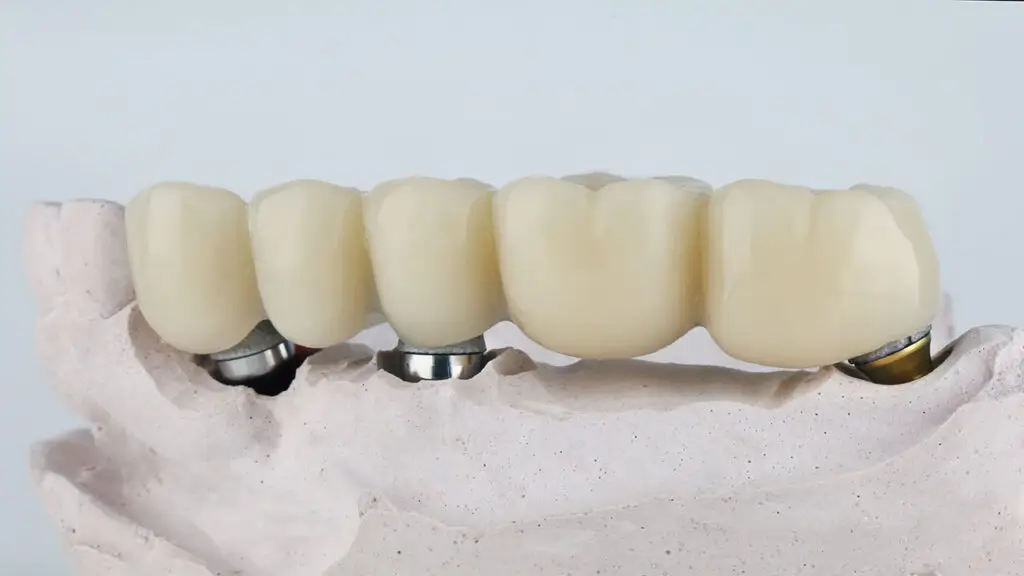
A fixed tooth replacement can make several missing teeth feel much easier to manage, but long-term success depends on more than having a strong bridge. The areas beneath and around the restoration still need daily attention. Patients with implant bridges benefit from learning how to clean spaces that a regular toothbrush cannot always reach and how to recognize small changes before they become larger concerns.
Implant bridges use dental implants to support several connected replacement teeth. Because the bridge is fixed in place, patients do not remove it at home for cleaning. Instead, home care focuses on brushing the visible surfaces while also cleaning beneath the bridge and around the implant-supported areas.
Why Implant Bridge Cleaning Is Different
Natural teeth can usually be flossed by moving floss between two separate teeth. An implant bridge often contains connected replacement teeth, which means ordinary floss cannot always pass straight down between them.
Food particles and plaque can still collect beneath the bridge. If these areas are ignored, the tissues around the implants can become irritated.
This is why implant bridges require a slightly different cleaning routine. Once patients learn the right tools and technique, the process can become a normal part of everyday oral care.
Brush the Bridge Every Day
Brushing twice daily remains important. A soft-bristled toothbrush can clean the chewing surfaces, outer surfaces, and areas near the gumline.
Patients should avoid assuming that an artificial bridge cannot collect plaque simply because it cannot develop a cavity in the same way natural enamel can. Plaque forms on dental restorations too, and the surrounding gum tissue still responds to bacterial buildup.
Gentle, thorough brushing helps protect the tissues surrounding implant bridges and keeps the visible restoration clean.
Why Cleaning Beneath the Bridge Matters
The space between an implant bridge and the gums can trap food and plaque. The exact amount of space varies depending on the bridge design and location.
If these areas are not cleaned, patients may notice inflammation, bleeding, unpleasant taste, or odor. Over time, unhealthy tissues around implants can become a more serious concern.
Daily cleaning beneath the bridge is therefore one of the most important habits for maintaining an implant-supported restoration.
Using Floss Threaders and Specialized Floss
A floss threader can help guide floss underneath connected replacement teeth. Some types of specialized floss have a firm end that can be passed beneath the bridge and a thicker section designed to clean the underside of the restoration.
The floss is guided gently through the space and moved along the bridge and tissue line. The goal is to remove plaque and debris without injuring the gums.
Patients should receive instructions for their specific implant bridges, because every restoration has slightly different contours and cleaning access.
Can a Water Flosser Help?
A water flosser can be a useful part of an implant bridge cleaning routine. A stream of water may help remove food particles from areas beneath the bridge that are difficult to reach with a toothbrush.
However, a water flosser should be used with the settings and technique recommended for the patient’s restoration. It should also be viewed as one part of the overall cleaning routine rather than an excuse to stop brushing.
For many patients, combining brushing with a water flosser and another method of cleaning beneath the bridge creates a practical routine.
Small Interdental Brushes May Be Useful
Interdental brushes are small brushes designed to clean narrow spaces. Depending on the design of the implant bridge, one may fit beneath certain portions of the restoration or around implant-supported areas.
The brush needs to fit comfortably. Forcing a brush that is too large into a small space can irritate the tissues.
The dental team can recommend the appropriate size and demonstrate where it can be used safely.
Benefits of Implant Bridges
- Fixed replacement of multiple teeth: Implant bridges restore several neighboring missing teeth with a restoration that stays in place.
- Support from dental implants: The bridge does not need to depend on removable clasps for retention.
- Protection of neighboring natural teeth: Healthy teeth beside the gap may not need to be prepared simply to support the bridge.
- Improved chewing stability: A fixed bridge can restore support to an area that was missing several teeth.
- Natural-looking design: Replacement teeth can be customized to coordinate with the surrounding smile.
- Jaw support at implant locations: Functional pressure is transferred into the jaw through the supporting implants.
- No nightly removal: Patients clean around and beneath the bridge while it remains in the mouth.
- Efficient replacement: Multiple connected teeth may be supported by fewer implants than placing a separate implant beneath every missing tooth.
What Kind of Toothpaste Should Be Used?
Patients should use products appropriate for both their natural teeth and dental restorations. Highly abrasive products may not be ideal for certain restorative surfaces.
The goal is effective plaque removal without unnecessary scratching or wear. If a patient is unsure which toothpaste or cleaning products are appropriate for implant bridges, the dental team can provide recommendations.
Using the correct products is especially helpful when a patient has a combination of implants, natural teeth, crowns, or other restorations.
Why the Natural Teeth Still Matter
Patients with an implant bridge often still have natural teeth elsewhere in the mouth. Those teeth continue to need cavity prevention, gum care, flossing, and professional maintenance.
A strong implant bridge does not protect the rest of the mouth automatically. Healthy natural teeth help support a balanced bite and overall oral function.
Cleaning should therefore focus on the entire mouth, not only the implant-supported area.
What Should Healthy Tissue Around an Implant Look Like?
Healthy tissues around an implant should generally feel comfortable and should not regularly bleed with gentle cleaning.
Occasional irritation can happen for different reasons, but repeated bleeding, swelling, tenderness, or a persistent bad taste should be evaluated.
Patients should not stop cleaning an area simply because it bleeds. Avoiding the area can allow additional plaque to collect. Instead, changes should be discussed with the dental team so the cause can be identified.
Can Food Get Under an Implant Bridge?
Yes, some food can occasionally collect beneath a bridge. The amount depends on the shape of the restoration, the location in the mouth, and the types of foods being eaten.
This is not necessarily a sign that the bridge was designed incorrectly. Cleaning access needs to exist so plaque and food can be removed.
If food trapping becomes excessive or suddenly changes, the bridge should be evaluated. A change in the gums, bite, or restoration may be contributing.
What Foods Should Be Avoided?
Once healing is complete, implant bridges are designed for everyday eating. However, artificial teeth and restorative materials can still be damaged by extreme forces.
Chewing ice, cracking hard shells with the teeth, biting hard candy, or using teeth as tools can damage both natural and restored teeth.
Patients who grind or clench may also place additional pressure on a bridge, especially during sleep. A protective appliance may be discussed when appropriate.
Why the Bite Needs to Be Checked
The way the upper and lower teeth meet affects how force is distributed across an implant bridge. If one part of the restoration begins receiving too much pressure, wear or discomfort can develop.
The bite can change gradually due to wear, changes in neighboring teeth, or other dental treatment.
Routine examinations allow the bite to be checked and adjusted when necessary. These small corrections may help protect implant bridges from unnecessary stress.
Why Professional Cleaning Is Different for Implant Bridges
Professional maintenance allows areas around and beneath an implant bridge to be cleaned more thoroughly than may be possible at home.
The dental team can also evaluate the gums, implant stability, restorative components, and surrounding bone as appropriate.
Specific instruments and techniques may be selected for implant restorations. Patients should continue attending maintenance visits even if the bridge feels completely comfortable.
What If the Bridge Feels Loose?
A fixed implant bridge should not normally rock or move. If a patient notices movement, clicking, a change in the bite, or another unusual sensation, the restoration should be evaluated.
A loose feeling does not automatically mean that an implant has failed. Restorative components can sometimes loosen or wear while the implants themselves remain healthy.
Prompt evaluation makes it easier to identify the source of the problem and reduce the chance of additional damage.
Can Implant Bridges Stain?
Restorative materials react differently to staining than natural enamel. While many implant bridge materials resist staining well, surface buildup can still affect appearance.
Coffee, tea, tobacco, and other habits may contribute to surface discoloration or plaque accumulation over time.
Regular home cleaning and professional maintenance help keep the restoration looking fresh.
How Often Should Implant Bridges Be Checked?
The appropriate maintenance schedule depends on the individual patient. Someone with a history of gum disease or more complex implant treatment may need a different schedule than someone with consistently healthy tissues.
The important point is that implant bridges should be monitored regularly rather than treated as a one-time procedure that never needs follow-up.
Preventive maintenance is usually much easier than dealing with a problem after it has progressed.
Common Questions About Implant Bridges
Do implant bridges need to be flossed?
Yes. Because the replacement teeth are connected, patients may need specialized floss, a floss threader, interdental brushes, or another method to clean beneath the bridge and around the implants.
Can I use a water flosser around an implant bridge?
A water flosser can be useful for many implant bridge patients. The dental team can recommend the appropriate technique and settings for the specific restoration.
What should I do if my implant bridge starts moving?
A fixed bridge that develops movement should be professionally evaluated. Movement can have several causes, and early attention can help prevent additional problems.
Can an implant bridge get a cavity?
The artificial bridge material does not develop cavities like natural tooth enamel, but the gums and bone around the supporting implants still require careful cleaning and maintenance.
Protecting a Fixed Restoration Starts at Home
Implant bridges can provide stable, natural-looking replacement for several missing teeth, but good maintenance is part of the treatment. Brushing, cleaning beneath the bridge, using appropriate tools, and keeping professional maintenance visits all help protect the tissues and restoration.
The best cleaning routine is the one a patient can perform consistently and correctly. Once the right tools become familiar, caring for an implant bridge can fit naturally into morning and evening habits.
If you have an existing implant bridge or are considering implant bridges for several missing teeth, contact The Dental Boutique at 727-999-6063 or visit 5138 Deer Park Dr Ste 102, New Port Richey, FL 34653 to Book an Appointment with Dr. Vallo and discuss your tooth replacement options.